How to Choose the Right Ayurvedic Anti-Acne Cream Manufacturer for Your Skincare Brand?
The licensed Ayurvedic Anti-Acne Cream Manufacturer will adhere to the regulatory laws, provide quality herbs, offer flexible minimum order sizes and assist in private labeling. There has been exponential growth in the Indian herbal cosmetics market due to the increasing consumer preference for natural skincare products.
Having an arrangement with such a reputable Ayurvedic anti-acne cream manufacturing company guarantees that any beauty brand will produce clinically tested Ayurvedic anti-acne creams without needing production facilities.
Contact Us
How to Identify Manufacturing Capabilities and Private Label Services for Ayurvedic Anti-Acne Creams?
Scalable Cleanroom Facility
Professional Ayurvedic manufacturing plants have high-volume cleanrooms with high-speed emulsifying equipment and tube filling machines. Therefore, this equipment helps maintain the quality of the active ingredients during mass production batches.
Private Labeling Flexibility
Expert Ayurvedic Cream Manufacturers provide different options for packaging. These options include airless pump bottles, tubes, and eco-friendly glass bottles. Also, custom label printing incorporates foil stamping and anti-counterfeiting features easily.
Custom Formulations Development and Advanced Research
Ayurvedic chemists and pharmacologists create non-comedogenic medicines in dedicated facilities at a leading third-party plant. Therefore, custom formulations provide your skincare brand with a unique competitive edge.
In-House AYUSH Regulatory Support
Experienced Ayurvedic anti-acne cream manufacturers help brand owners get all necessary AYUSH licenses and product approvals. In addition, they make sure that all product claims comply with official cosmetic labeling regulations strictly. Hence, professional regulatory support saves you from expensive delays associated with entering the market.
Multi-Step Quality Assurance Testing
Trusted production facilities conduct thorough analytical testing of heavy metals, microbial content, and pesticide residues. Moreover, stability tests help to confirm the shelf life of the product at varying temperatures. Consequently, each shipment is guaranteed to meet consumer safety criteria.
What Kind of Active Ingredients and Standards Can Be Expected from an Ayurvedic Acne Cream Brand?
Evaluation Criteria
Requirements & Standards
Business & Customer Benefits
Active Ingredients of Herbs
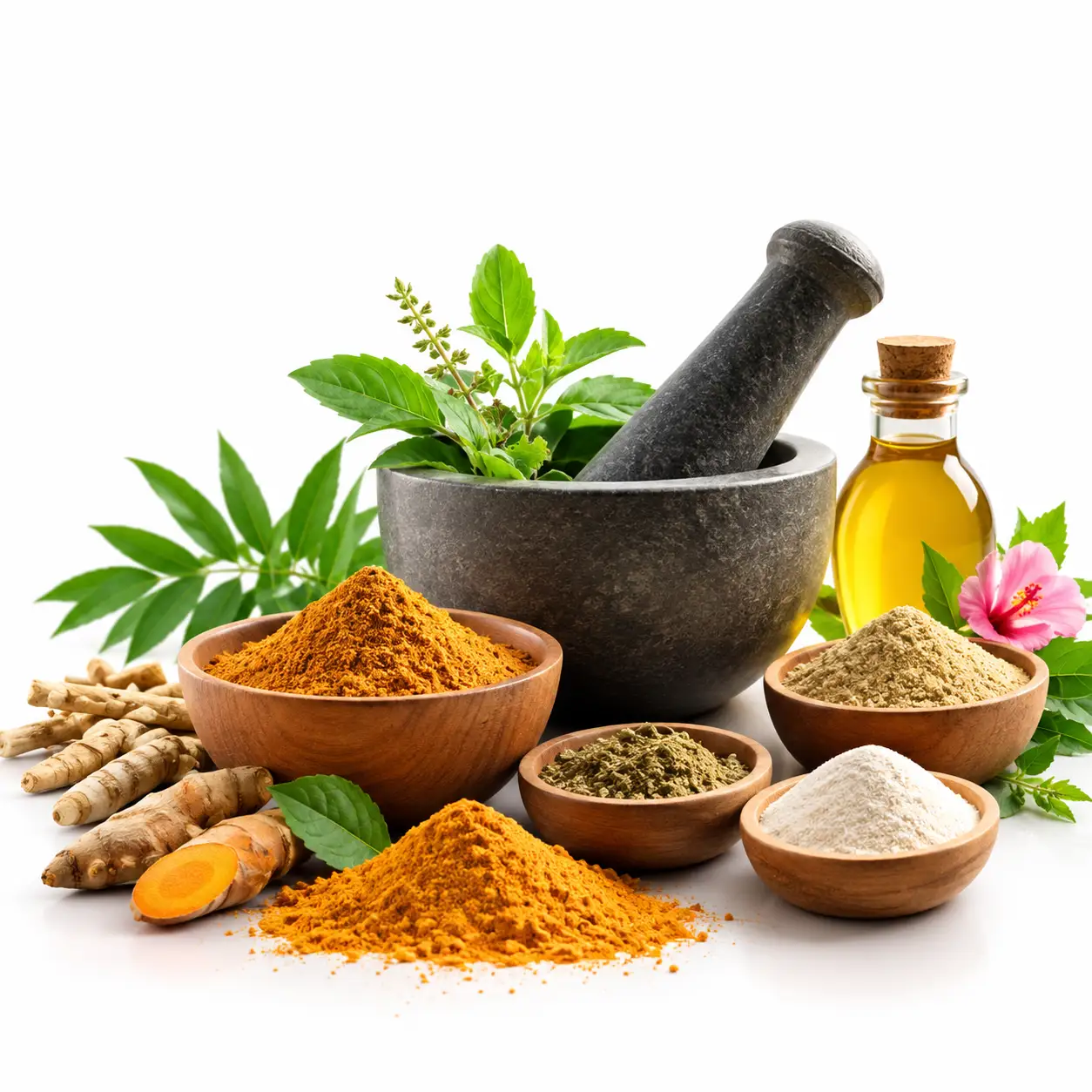
Neem, Tulsi, Haldi, Tea Tree, Manjistha standard extract
Supports the intended antibacterial and anti-inflammatory properties of the formulation.
Safety Check
Heavy metal testing (lead, mercury, arsenic) and absence of parabens
Helps assess product safety, reduce potential skin irritation risks, and protect product reputation.
Conformity to Guidelines
Applicable AYUSH certification, ISO 22716, and Schedule T GMP compliance, as relevant to the product
Supports regulatory compliance and market readiness, subject to applicable requirements.
Feel & Shelf Life
Fast-absorbing, non-greasy emulsion formula with a target shelf life of up to 24 months, subject to stability testing
Provides a pleasant skin feel and may help reduce customer complaints and product returns.
Environmentally-Friendly Packaging
Eco-friendly recyclable bottles, tamper-proof seals, and UV barrier coatings
Helps protect product quality and supports consumer preferences for recyclable packaging.
Visit: 16,17,18,19 Nh-1, near Pratap Factory, Mohra, Ambala Cantt, Haryana 133004
Key Aspects To Be Considered While Selecting a Reliable Manufacturer of Private Label Ayurvedic Anti-Acne Cream
Genuine Sources of Organic Ingredients
Whether the manufacturer is buying organic raw botanical extract materials from certified organic farms or authorized distributors. Using genuine organic raw botanical material results in better anti-inflammatory properties and more orders. Working with a dedicated herbal anti-acne cream manufacturer ensures your product delivers real botanical efficacy.
Price Structure
Receive a cost analysis consisting of raw material costs, manufacturing cost, packing cost, and shipping cost. This will ensure you won't face unexpected expenses at the time of mass batch manufacturing. Thus, a transparent quotation helps protect your profit margin.
Minimum Order Quantity
Choose a Private Label Ayurvedic Acne Cream manufacturer that offers flexible batch MOQ starting from 500-1,000 pieces. Low MOQs will help startups to test marketing strategy and avoid extra expenses. Thus, a flexible minimum order quantity will lower your risk.
Proven Batch Consistency Protocol
Check the factory documents to ensure that the manufacturer keeps detailed batch processing records. Consistent viscosity, fragrance, and color will contribute to building consumer trust in your products. Therefore, quality control procedures are very important for keeping your brand name.
Deadlines for Order Delivery
See how efficiently the Ayurvedic anti-acne cream manufacturer manages the procurement of materials, production, and delivery of orders. Properly coordinated logistics do not allow a shortage of products when intensive marketing and seasonal campaigns take place. This is the reason why timely order processing guarantees the availability of products in the distribution channel.
Why Choose GTB Cosmetics for the Production of Ayurvedic Anti-Acne Cream?
GTB Cosmetics is one of the leading Ayurvedic anti-acne cream manufacturers in India and provides private labeling services for new skincare brands. Established in Ambala Cantt, Haryana, the company produces Ayurvedic cosmetics in state-of-the-art ISO- and Schedule T GMP-certified manufacturing facilities as a reliable Herbal Anti-Acne Cream Manufacturer.
In addition, the R&D department of the manufacturer develops non-comedogenic herbal anti-acne formulas based on the combination of Ayurveda and dermatology. As a leading private label Ayurvedic anti-acne cream manufacturer, GTB Cosmetics provides clear commercial pricing, low MOQ, and fast order delivery. This will allow skincare entrepreneurs to create their own profitable and high-margin beauty brand.
Work with an already ISO 9001:2015 and AYUSH-approved manufacturing company.
Avail yourself of various non-comedogenic Ayurvedic anti-acne cream formulas available to you in a customized form.
Customization is available in terms of packaging, including bottles, tubes, and boxes.
Have a minimum MOQ as per the requirements of your new brand from an eminent Ayurvedic anti-acne cream manufacturer.
Documentation and quick delivery in India are guaranteed.
The Final Word
Working with an expert Ayurvedic Anti-Acne Cream Manufacturing Company gives you a quick way to develop a profitable skincare brand in India’s growing beauty market.
Partnering with a reliable Ayurvedic anti-acne cream manufacturer ensures you don’t have to pay any overheads for a facility while guaranteeing that your product is AYUSH compliant. In addition, there is flexibility in minimum order quantity and packaging services that help new brands to emerge and grow fast. Professional companies like GTB Cosmetics offer the latest R&D, herbs, and contract production to skincare brands.
Frequently Asked Questions
Q1. How can I get an AYUSH approval for my private label cosmetic brand?
Ans. Your contract manufacturer will file all the technical information and factory documentation through the official channels of state AYUSH licensing authorities.
Q2. What active plant ingredients are best in anti-acne cream formulations?
Ans. Antibacterial and acne-calming neem, tea tree oil, turmeric, aloe vera and manjistha.
Q3. Is it possible to change the fragrance and the texture of my anti-acne cream?
Ans. Yes, private label manufacturers will help you adjust the emulsion viscosity and absorption rate, as well as a natural fragrance based on essential oils.
Q4. What is the shelf life of Ayurvedic anti-acne cream?
Ans. If developed properly and packed in appropriate containers, Ayurvedic creams can have a shelf life of up to 24 to 36 months.
Q5. What tests need to be performed on Ayurvedic skincare products?
Ans. Heavy metal analysis, microbial limit testing, skin irritation patch tests, and stability tests are carried out before the distribution of products.
Q6. How can low minimum order quantities benefit new skincare businesses?
Ans. Minimum order quantities allow new skincare products to understand consumer demand for them without spending much money.
Q7. What is the most efficient packaging method for anti-acne creams?
Ans. For the preservation of the active herbal extract of the products, airless pumps and laminated aluminum tubes are the most suitable packaging types.
Q8. Is it possible to sell Ayurvedic cosmetics online without a drug license?
Ans. As an entrepreneur, you would need to have an incorporated business, GST number, and trademark; your contract manufacturer will possess AYUSH licenses.
Q9. What is the time frame of ayurvedic third-party manufacturing?
Ans. From the customization of formula to the delivery of final products, the time span may vary from 20 to 35 days.
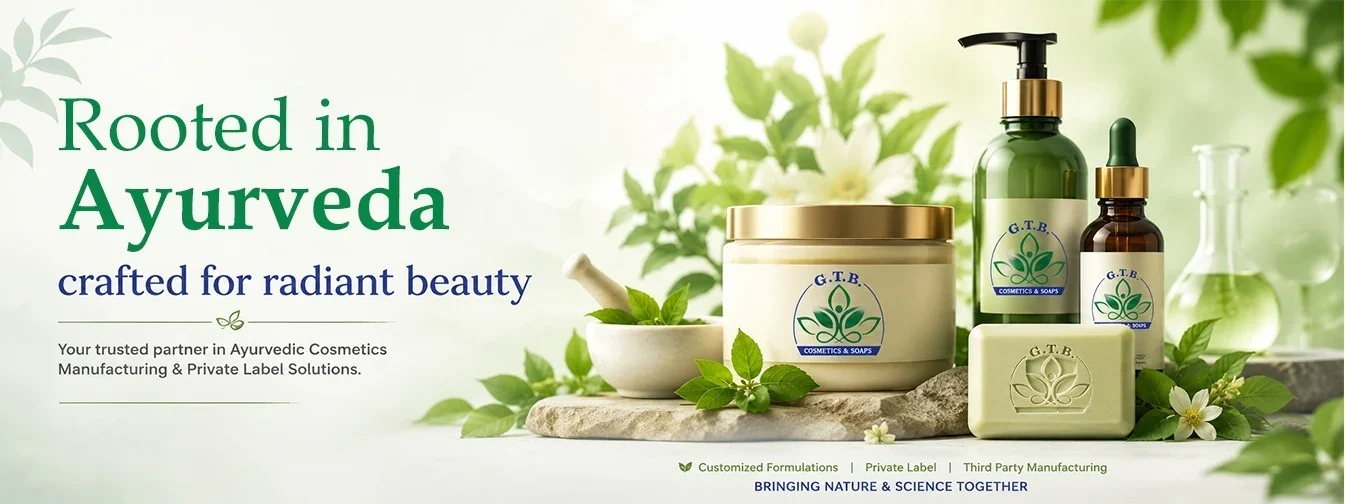

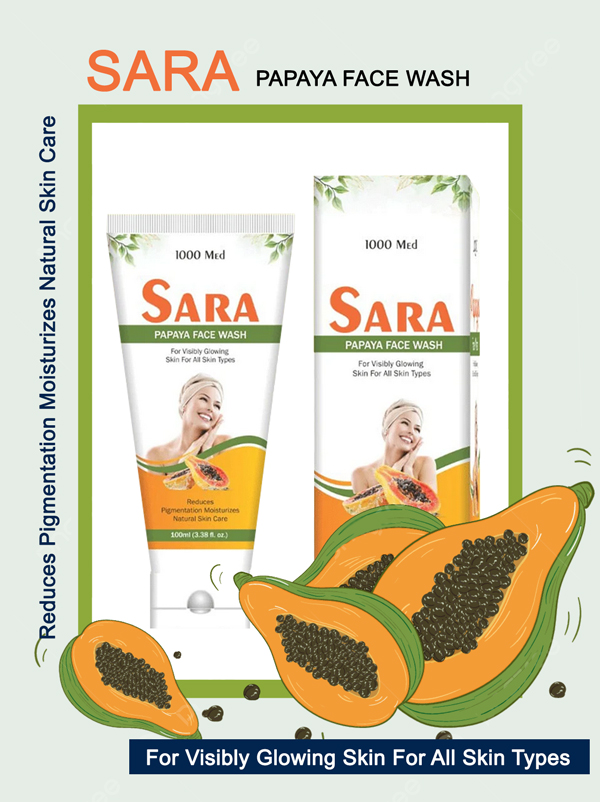
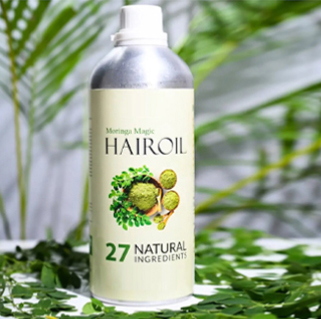


 From the reliable ingredient provider to the complete, hygienic packaging, we take care of every aspect of our production. This is why today we have achieved the title of a top manufacturing company, producing an excellent quality cosmetic range and providing very affordable prices to all our cosmetic companies' clients. thus, across India, we are the only one-stop destination to provide manufacturing benefits of a superior range of Ayurvedic and Herbal Cosmetics.